
So, you’re going through a divorce and cryptocurrency is involved. It’s a whole new ballgame, right? Figuring out what to do with digital money like Bitcoin or Ethereum during a split can feel pretty confusing. This stuff isn’t like a house or a car; it’s digital, it moves fast, and not everyone understands it. We’ll break down some important things to think about when Family Law Crypto comes into play, so you’re not completely lost.
Key Takeaways
- Make sure you know what counts as a digital asset, like different kinds of crypto and where you keep them (wallets).
- Be upfront about all your digital money when you’re separating; hiding it can cause big problems.
- Figuring out how much digital assets are worth at a specific time can be tricky, and you might need an expert.
- There are different ways to split up crypto, like dividing it or one person buying out the other.
- Keeping your digital money safe and making sure ownership transfers correctly is important, and blockchain can help prove things.
Understanding Digital Assets in Family Law Crypto

Okay, so we’re talking about divorce and crypto. It’s a whole new ballgame, right? Before we get into the nitty-gritty of dividing things up, we really need to get a handle on what we’re even dealing with. It’s not like dividing up a house or a car. These digital assets are pretty unique.
Defining Cryptocurrencies and Digital Wallets
First off, what exactly is cryptocurrency? Think of it as digital money, but it’s not controlled by any bank or government. It uses something called blockchain technology to keep track of transactions. Bitcoin and Ethereum are probably the most well-known, but there are thousands of others out there. Then you have digital wallets. These aren’t physical things; they’re like digital bank accounts where you store your crypto. They can be software on your computer or phone, or even a small hardware device. Knowing the difference between the actual coins and where they’re stored is step one.
The Volatile Nature of Crypto Assets
Here’s a big one: crypto prices can swing wildly. One day a coin might be worth a lot, and the next day, it could be worth next to nothing. This makes figuring out its value for divorce purposes tricky. It’s not like a stock that might go up or down a bit; crypto can be incredibly unpredictable. This volatility means that the value you see today might be completely different by the time a settlement is finalized.
Identifying All Digital Holdings
This is where things can get complicated. People might have crypto spread across different exchanges, different wallets, or even forgotten accounts. It’s not always obvious what someone owns. You might have:
- Coins held on major exchanges like Coinbase or Binance.
- Crypto stored in personal software wallets (like Exodus or MetaMask).
- Assets on decentralized finance (DeFi) platforms.
- Even old accounts from years ago that might still have some value.
It’s really important to try and find everything. Sometimes, one spouse might not even know the full extent of what the other holds, or worse, might be trying to hide it. We’ll get into that more later, but for now, just know that a thorough search is needed.
Trying to figure out crypto holdings during a divorce can feel like searching for a needle in a haystack, especially when the haystack itself is constantly changing shape and size. It requires a different approach than traditional asset division.
Disclosure Obligations for Crypto Assets in Divorce
When you’re going through a divorce, honesty about what you own is a big deal. This is especially true with crypto. It’s not like a house or a car that’s easy to see. Hiding crypto assets can lead to some serious trouble down the line. Courts expect both parties to lay all their cards on the table, and that includes any Bitcoin, Ethereum, or other digital coins you might have stashed away.
The Importance of Full and Honest Disclosure
Think of it this way: divorce is about dividing up everything you and your spouse have built together. If one person doesn’t reveal all the assets, the other person doesn’t get their fair share. With crypto, it’s tempting to think you can just keep it quiet. Maybe you bought it years ago, or maybe you’re just not sure how to explain it. But the law requires you to disclose it. This means listing all your digital wallets, exchanges where you have accounts, and the approximate amounts you hold. It’s better to be upfront, even if the value has gone up or down a lot.
Tracing Hidden or Undisclosed Crypto
So, what happens if someone doesn’t disclose? Well, divorce lawyers and forensic accountants are getting pretty good at finding hidden assets, crypto included. They can look at bank records, trading histories on exchanges, and even blockchain explorers to see where money has gone. If they find crypto that wasn’t disclosed, it looks really bad for the person who hid it. It can make the judge less sympathetic to their other requests.
- Reviewing financial statements: Banks and credit card companies often show purchases that could be linked to crypto exchanges.
- Examining digital footprints: Online activity, email records, and even social media can sometimes hint at crypto ownership.
- Utilizing blockchain analysis tools: Specialized software can trace transactions on public blockchains.
Hiding assets during a divorce isn’t just dishonest; it’s a legal risk. Courts take a dim view of parties who don’t comply with disclosure rules, and the consequences can be severe, impacting not only the division of assets but also potential spousal support or child support calculations.
Consequences of Non-Disclosure
If you’re caught hiding crypto, the penalties can be pretty harsh. The court might give the entire undisclosed asset to the other spouse. You could also be ordered to pay fines or even face contempt of court charges. Plus, it makes the whole divorce process way more stressful and expensive, with lawyers digging into every transaction. It’s just not worth the risk. Being open from the start saves a lot of headaches later on.
Valuation Challenges for Family Law Crypto
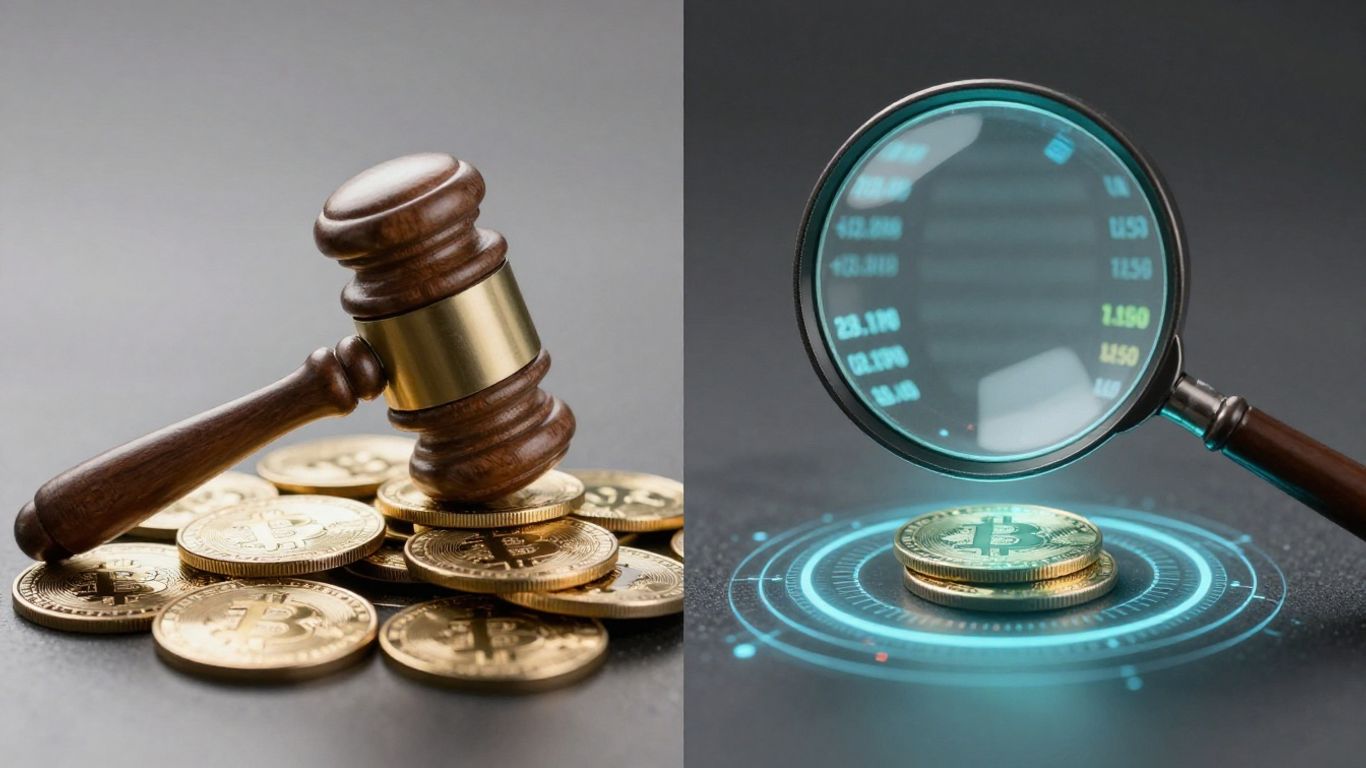
Figuring out what crypto assets are actually worth when a marriage ends can be a real headache. It’s not like a bank account where the balance is clear. The value of cryptocurrencies swings wildly, sometimes by huge amounts in just a day. This makes pinning down a precise value at the exact moment of separation tricky.
Determining Fair Market Value at Separation
So, how do you decide what a Bitcoin or Ethereum was worth on, say, the day you separated? The most common approach is to look at the average price across major exchanges during a specific timeframe around the separation date. But even that can be debated. Was it the highest point that day? The lowest? The closing price? Different exchanges might show slightly different numbers too. It’s a bit like trying to nail jelly to a wall sometimes.
Accounting for Transaction Fees and Taxes
Then there are the hidden costs. When you sell crypto, you usually pay fees. And if you make a profit, there are taxes. Should the valuation include these potential costs? If one spouse wants to cash out their share, they’ll get less after fees and taxes. So, it makes sense to consider these. It’s not just the sticker price; it’s what you actually get in your pocket. If you are navigating such a situation, seeking legal assistance from The VanNoy Firm is recommended.
Expert Witness Testimony for Valuation
Because this stuff is so complicated, you might need an expert. A forensic accountant or a crypto specialist can help. They can trace transactions, figure out values, and explain it all to a judge. They’ll look at:
- The specific cryptocurrencies involved.
- The wallets where they were stored.
- The transaction history.
- The market conditions at the relevant time.
The decentralized nature of many crypto assets means there isn’t one central authority to verify value. This lack of a single, universally accepted price point adds layers of complexity to divorce proceedings.
Sometimes, one spouse might want to keep all the crypto. In that case, they might have to give the other spouse other assets of equivalent value. This could mean selling some crypto to buy a car or pay down a mortgage, which brings us back to those fees and taxes. It’s a balancing act, for sure.
Division Strategies for Cryptocurrency Assets
Okay, so you’ve figured out what crypto your soon-to-be-ex has and what it’s worth. Now comes the tricky part: how do you actually split it up? It’s not like dividing up a house or a car. This is where things can get really interesting, and sometimes, a little messy.
Equitable Distribution of Digital Portfolios
When we talk about splitting up crypto, the goal is usually fairness. This means looking at the whole picture of digital assets. It’s not just about handing over half of a Bitcoin. You might have one spouse who’s really into Bitcoin, while the other prefers Ethereum or even some smaller altcoins. The idea is to divide the total value in a way that feels right for both parties, considering their individual preferences and risk tolerance if possible.
Here’s a way to think about it:
- Assess the Total Value: First, get a clear picture of the combined worth of all crypto holdings at the time of separation. This is your starting point.
- Consider Individual Holdings: Look at what each person already owns or has contributed. Sometimes, one spouse might have acquired certain assets before the marriage or through separate inheritance.
- Allocate Based on Value: The simplest approach is often to divide the total value. For example, if the total crypto is worth $100,000, each spouse might be entitled to $50,000 worth. This doesn’t necessarily mean they get exactly half of every single coin.
- Factor in Future Potential: While difficult, sometimes discussions might touch on the future growth or risk associated with certain assets. This is where things can get complicated, as crypto is so unpredictable.
Buy-Out Options for One Spouse
Sometimes, one spouse might want to keep all the crypto, or at least a larger portion. This is where a buy-out comes into play. The spouse who wants to keep the assets essentially pays the other spouse their share in cash or other marital property. This can simplify things, especially if one person is more knowledgeable about managing crypto and the other isn’t.
This often works best when there are other significant assets to divide, like real estate or investment accounts. It allows for a clean break from the digital assets without needing to constantly track or transfer them.
Creative Solutions for Complex Holdings
What if the crypto is spread across dozens of different coins, or held in complex DeFi protocols? This is where you might need to get a bit more inventive. Maybe one spouse takes a collection of less volatile coins, while the other takes a mix that includes some higher-risk, higher-reward assets. Or, perhaps a portion of the crypto is sold off to create a cash settlement, making the division more straightforward.
It’s important to remember that the legal framework for crypto is still evolving. Judges and lawyers are learning as they go, so being flexible and open to new ideas is key. Don’t be afraid to propose solutions that might seem a little unconventional, as long as they achieve a fair outcome.
Here are some ideas:
- Phased Transfers: Instead of transferring all crypto at once, agree on a schedule for transfers over time. This can help manage risk for the receiving spouse.
- Third-Party Custody: In very complex cases, a neutral third party might hold some assets temporarily until a final agreement is reached or a transfer is completed.
- Valuation Adjustments: If one spouse takes on a portfolio with higher volatility, there might be an agreed-upon adjustment to their share of other assets to compensate for the added risk.
Securing and Transferring Digital Assets
Okay, so you’ve figured out what crypto you have and how much it’s worth. Now comes the tricky part: actually getting your hands on it or making sure it’s properly accounted for in the divorce. This isn’t like dividing up a savings account; digital assets have their own set of rules and risks.
Safeguarding Private Keys and Seed Phrases
This is probably the most important bit. Your private keys and seed phrases are like the master keys to your crypto kingdom. Lose them, and your crypto is gone forever. In a divorce, one spouse might try to hide these, or worse, accidentally lose them. It’s vital to know where these are stored and who has access. Think of it like knowing where the deed to the house is kept.
- Private Keys: These are long strings of characters that give you ownership and control over your cryptocurrency. They should be kept super secret.
- Seed Phrases (Recovery Phrases): Usually a list of 12 or 24 words, this phrase can regenerate your private keys if you ever lose them. It’s the ultimate backup, so it needs protection too.
- Storage Methods: Are they written down and hidden? Stored digitally in an encrypted file? On a hardware wallet? Each method has its own security level.
The security of your digital assets hinges entirely on the protection of your private keys and seed phrases. Without them, access to your funds is impossible, making their proper handling during a divorce settlement a matter of utmost financial importance.
Executing Secure Transfers of Ownership
Transferring crypto isn’t as simple as signing over a car title. You’re dealing with digital ledgers and specific protocols. If you’re splitting assets, you need to make sure the transfer is clean and verifiable. This often involves sending the crypto from one wallet to another. The challenge is making sure the right amount goes to the right place without any funny business.
- Wallet-to-Wallet Transfers: The most common method, but requires careful attention to addresses.
- Exchange Transfers: Moving crypto between accounts on exchanges can sometimes be easier, but might incur fees or have withdrawal limits.
- Third-Party Services: Some services can help facilitate transfers, but research their reliability and fees.
Utilizing Blockchain Technology for Verification
This is where things get interesting. The blockchain itself can be your friend when it comes to proving ownership and transfers. Every transaction is recorded on a public ledger, which can be a great way to show what happened. It’s like having an unchangeable record of every time money moved.
- Transaction IDs (TxIDs): Each crypto transaction gets a unique ID. You can use this to look up the transaction on a blockchain explorer and see its status and details.
- Wallet Addresses: While addresses are pseudonymous, they can be linked to specific transactions and amounts.
- Smart Contracts: For more complex arrangements, smart contracts can automate the transfer of assets once certain conditions are met, adding a layer of security and certainty.
Navigating International and Jurisdictional Issues
Cross-Border Crypto Asset Recognition
Dealing with cryptocurrency in a divorce gets complicated fast when assets are spread across different countries. It’s not like a house or a bank account that’s usually tied to one place. Crypto can be accessed from anywhere, and exchanges might be based in jurisdictions with very different rules. This makes it tricky to figure out whose laws apply and how a court in one country will treat crypto held or traded in another. We’re talking about a whole new level of complexity here, where what’s recognized in your home country might not be in the country where an exchange is registered or where a digital wallet is technically located.
Enforcement of Orders in Different Jurisdictions
Even if you get a court order in your home country about crypto assets, actually making it stick in another country is a whole different ballgame. Imagine a judge here orders your spouse to hand over certain Bitcoin. But if that Bitcoin is held on an exchange in, say, Singapore, or if your spouse is physically in Mexico, that order might not mean much there without further legal steps. You might need to go through separate legal processes in that other country to get the order recognized and enforced. This can involve a lot of extra time, money, and legal wrangling.
Understanding Varying Regulatory Frameworks
Different countries have wildly different ideas about how to regulate crypto. Some have very strict rules, others are pretty hands-off. This impacts everything from how assets are taxed to whether they’re even considered legal property that a court can divide. For example, a country might classify crypto as a commodity, a currency, or something else entirely. This classification can affect how it’s valued and how it’s treated in a divorce settlement. It’s a bit of a legal minefield, and you really need someone who knows both family law and international crypto regulations to help you sort it out.
- Research the specific crypto regulations in any relevant foreign jurisdictions.
- Consult with legal professionals experienced in both international family law and cryptocurrency.
- Be prepared for potentially longer timelines and increased legal costs due to cross-border complexities.
The decentralized nature of many cryptocurrencies means that traditional legal frameworks, designed for geographically bound assets, often struggle to keep pace. This gap creates significant challenges when trying to apply domestic divorce laws to assets that exist purely in the digital, borderless space.
Wrapping It Up
So, dealing with crypto in a divorce isn’t exactly a walk in the park. It’s new territory for a lot of people, and the rules are still being figured out. If you’ve got digital assets, it’s really important to be upfront about them. Trying to hide them usually just makes things way more complicated and expensive down the road. Talking to a lawyer who actually knows about crypto is a good idea. They can help you figure out how to value it and what your options are. It might seem like a headache now, but getting this sorted properly will save you a lot of trouble later on. Just remember to keep good records and be honest about what you own.
Frequently Asked Questions
What exactly is cryptocurrency, and why is it tricky in divorce?
Cryptocurrency is like digital money, existing only online. Think Bitcoin or Ethereum. It’s tricky in divorce because it can be hard to find and its value changes a lot, making it tough to know how much it’s worth at any given time.
Do I have to tell my ex about my crypto during a divorce?
Yes, absolutely! You need to be honest about all your money and stuff, including crypto. Hiding it can lead to big problems, like fines or the judge making unfair decisions about your assets.
How do you figure out how much crypto is worth when divorcing?
Figuring out the value is tricky because crypto prices jump around. Usually, lawyers and experts look at the price around the time you separated. They also have to think about fees and taxes you might have to pay, which can lower the actual amount you get.
How can my ex and I split up our crypto fairly?
Splitting crypto can be done in a few ways. One person might keep it all and pay the other spouse cash for their share. Or, you might sell some and split the money. Sometimes, creative ideas are needed if the crypto is complicated or spread out.
How do I keep my crypto safe when transferring it during a divorce?
Keeping crypto safe means protecting your secret codes, called private keys or seed phrases. These are like the passwords to your digital money. You need to make sure these are handled securely and that the transfer of ownership is done correctly, often using the technology behind crypto, called blockchain, to prove it happened.
What if my ex has crypto in another country?
When crypto is in different countries, it gets more complicated. Laws about crypto can be different everywhere. It might be harder to get a court order from one country to be followed in another, and figuring out which country’s rules apply can be a headache.